


I go by many real names.
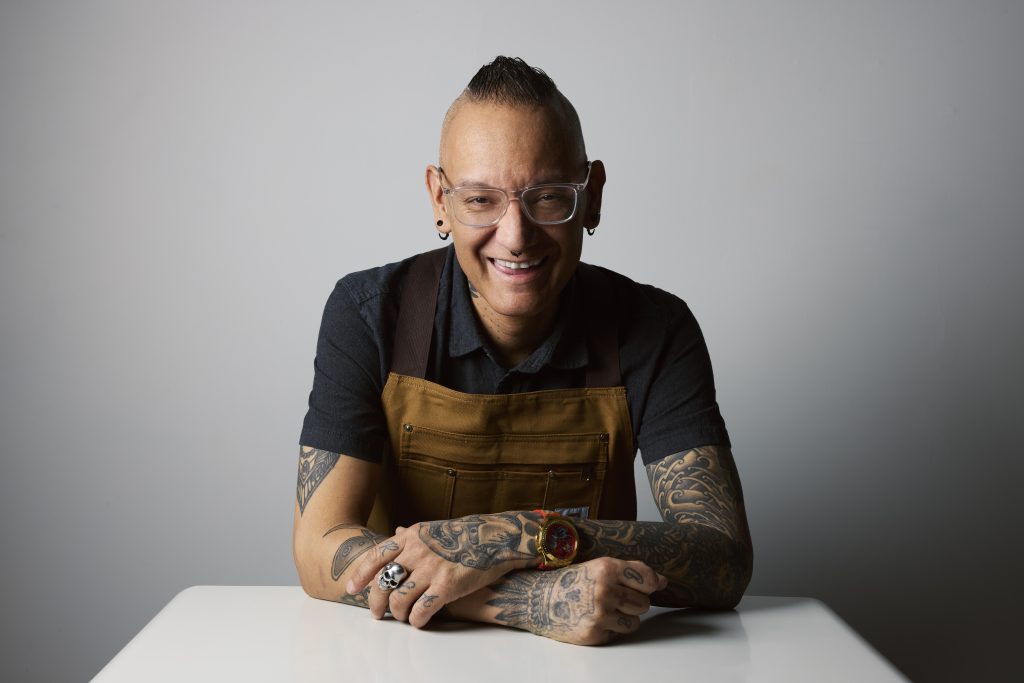
Shane Mederic Chartrand. That is my adopted family name, given to me by the family who raised me and saved me from foster care.
Shane St. John Gordon. That is my birth name, from my blood family.
Wase Acahkos. Bright shining star. That one was given to me by my community for the giving and teaching I have done with youth, elders, and knowledge keepers.
Three names, one person. I carry all of them.
The Years Without Roots
I was given up from my reserve at the age of one. Between then and the age of seven, I went through more than ten different homes in Calgary. At seven, I was adopted.
Even after that, I did not celebrate my roots. I knew I was Indigenous, but I had no clue where I was from. That not knowing stayed with me for a long time.
Then, at the age of thirty, I finally found my origin. Enoch Cree Nation!
To me, that was catch up time.
Catching Up
By then I already had my professional culinary training behind me. I had competed, written books, travelled, been on television. But finding Enoch Cree Nation meant it was time to celebrate Cree cuisine and what it truly means to me.
I went to powwow. I went to ceremony. I danced. It was time for me to catch up with my culture.
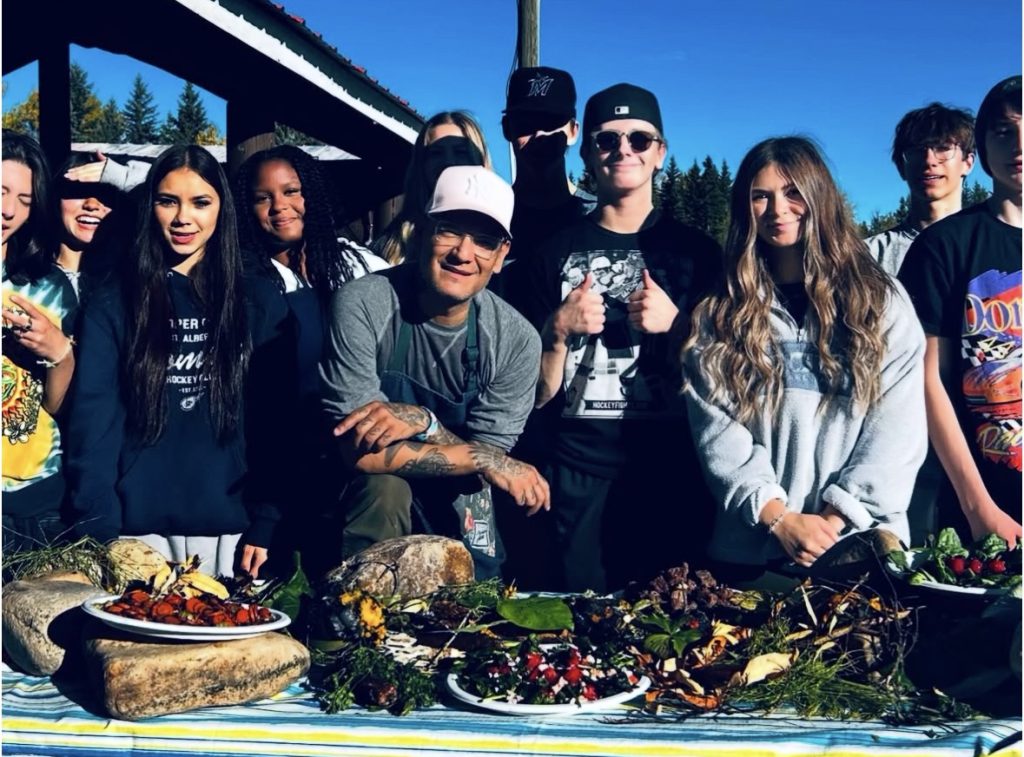
Now I do not only celebrate my own culture. Through my recipes, I carry knowledge bundles. I choose Indigenous workshops, Indigenous contracts, and Indigenous food on every level, because I want to teach the world why Indigenous food is the real first Canadian cuisine.
Why Don’t We See More Indigenous Restaurants?
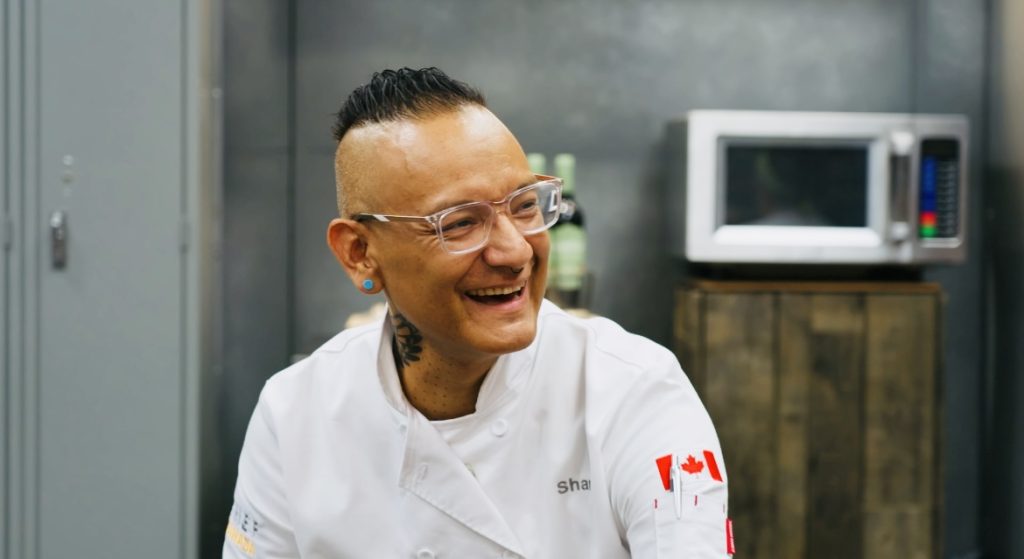
The answer is that food was taken from our elders, the same way our voices, our culture, and our regalia were taken. But not from all of our elders. There are still some who teach real food. But it takes time for people to study and do research on our world well enough to understand our food. It would take a lifetime to fully understand it.
But we must start somewhere.
Where My Recipes Come From
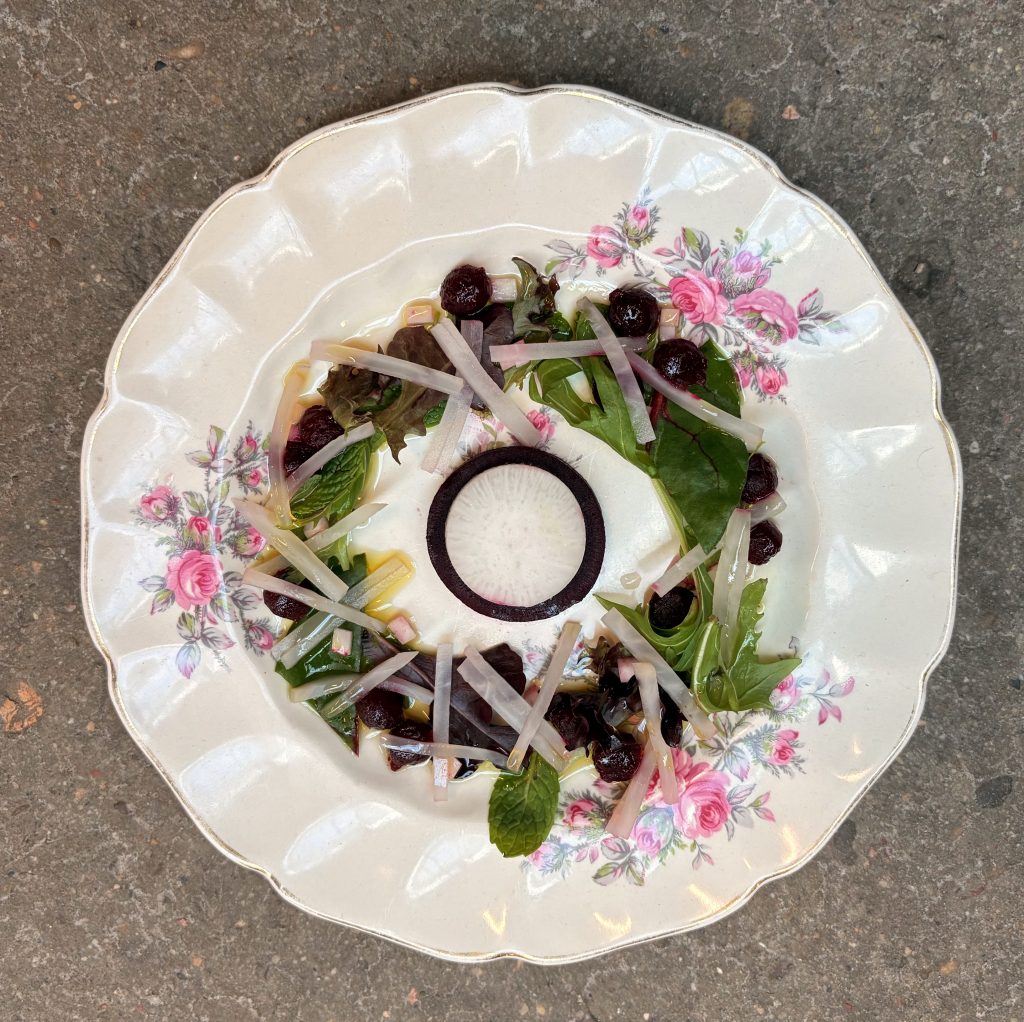
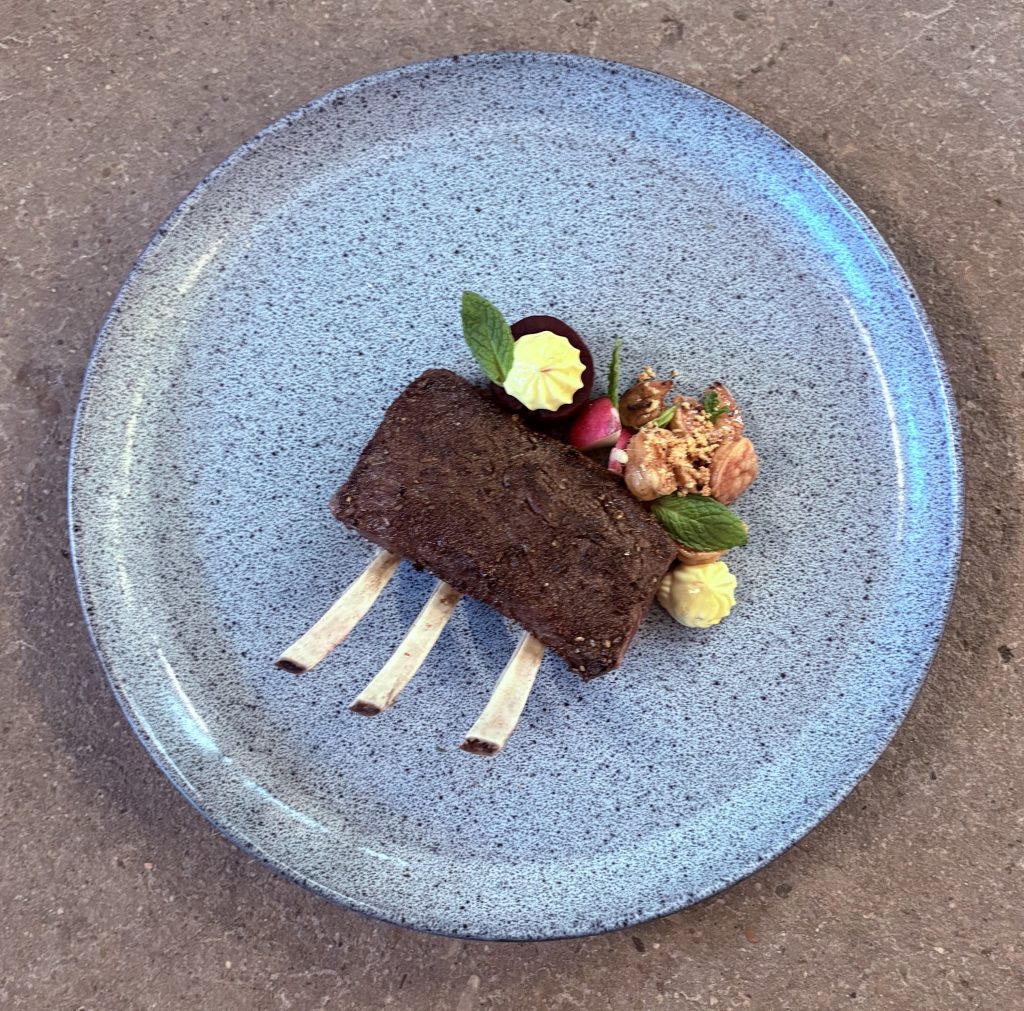
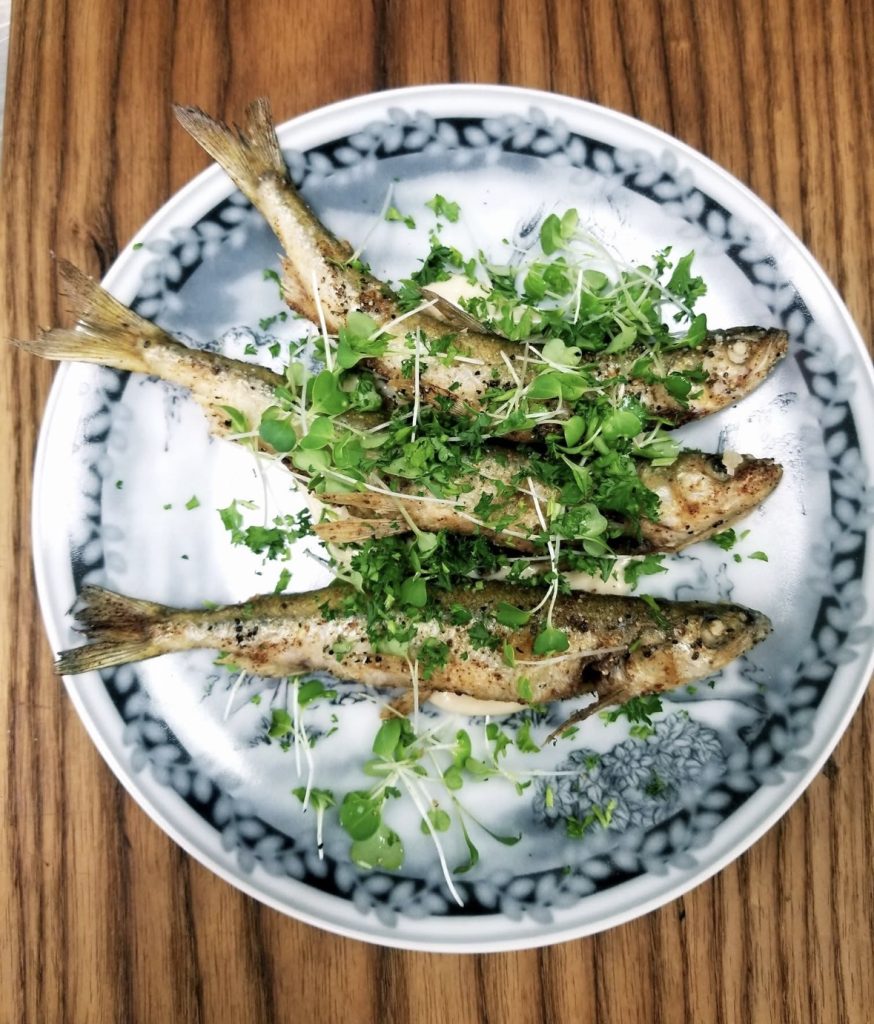
My recipes are based on where I have visited and the other Nations I have gotten to know and become great friends with, Blood Tribe, Lummi Nation, Stoney, Coast Salish, Haida, Metis, Anishinaabe, and more.
I have visited and cooked Indigenous food in Chicago, New York City, the Northwest Territories, Yukon, Los Angeles, Vancouver, Toronto, Cairo, and Sharm El Sheikh, among other places.
The Three Sisters
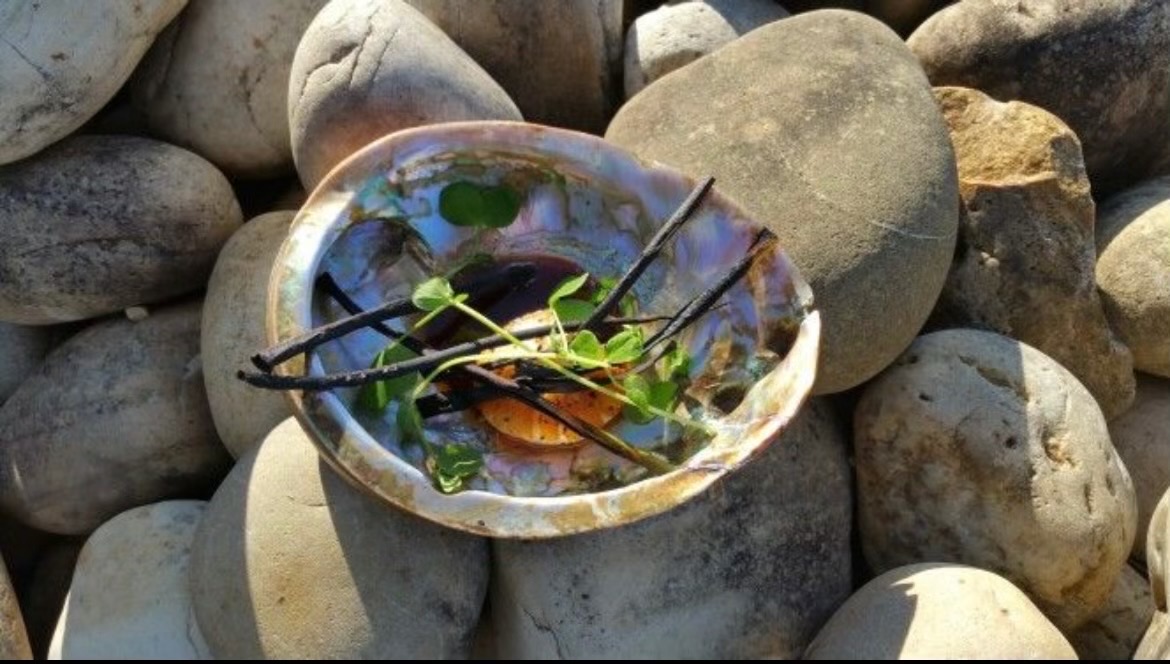
Corn, beans, and squash. Eaten together, they create a balanced diet. They are connecting plants, and a gift from Mother Earth.
Corn grows strong. Beans pull nitrogen into the soil. Squash keeps the soil moist. Each one helps the others.
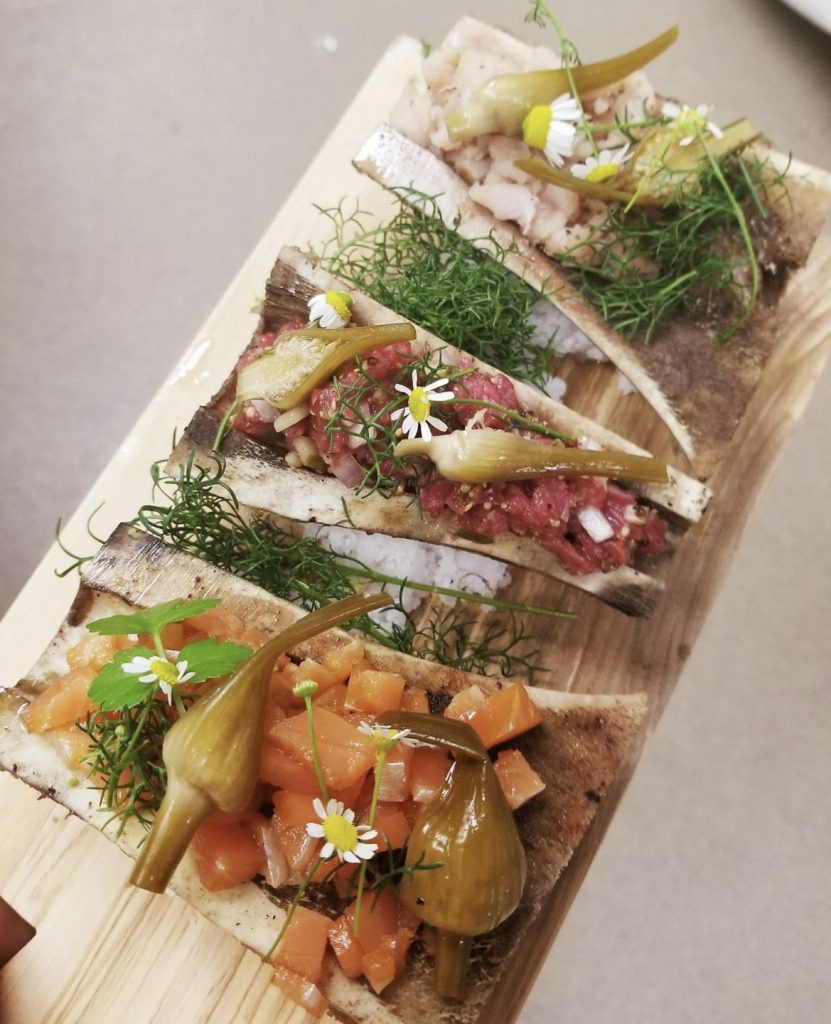
My version of this recipe celebrates all three. With my professional chef training, I am able to create recipes of my own to showcase these ingredients!
1 side fresh wild coho salmon
1 cup curing salt
salt and pepper to taste
1 cup sugar
1 cup beet juice
6 oz tomato
6 oz beans
1 cup acorn squash
1 cup defrosted corn niblets
1 cup zucchini
6 oz thyme
6 oz sage
1 cup tomato sauce
canola oil
2 whole yellow onions
chips or crackers for serving
1. Cure the salmon for one night by adding the sugar, salt, beet juice in a shallow pan that can press the salmon down flat.
After 24 hours rinse the salmon off vigorously until completely rinsed and pat dry.
2. Cut up all of the vegetable evenly to “small dice” equivalency, about 1/4 inch square.
3. Chop up all of the herbs finely.
4. Saute the vegetables in oil, minced garlic, salt and pepper to taste. Let cool.
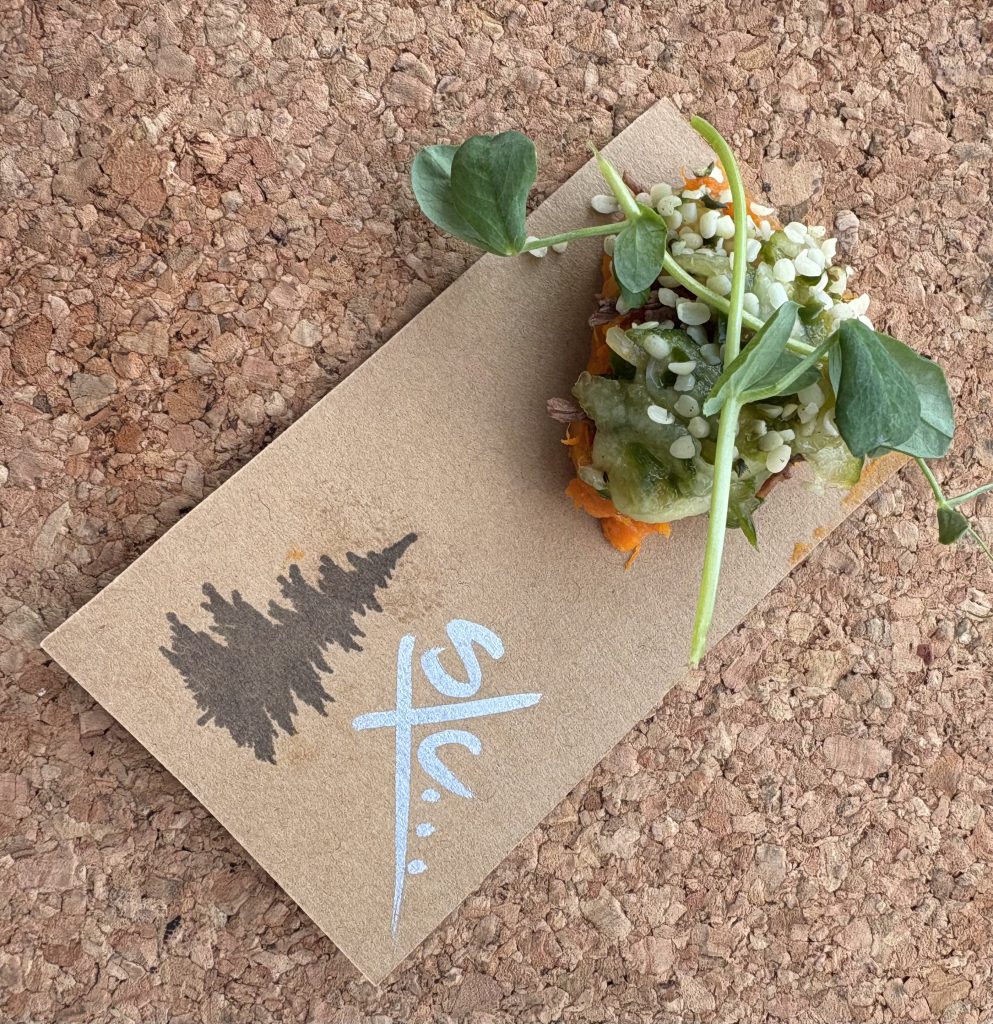
5. Dice up the salmon into the same dice and add to the Ratitoulle and gently mix.
6. Serve cold with your choice of chips or crackers.
This Is Only the Beginning
I will keep learning and cooking Indigenous cuisine until I expire. Food is all I know, and it is all I want to eat, see, listen to, and cook. More is always coming.
If you ask me to define our food in my own words, here it is. Ethically collected ingredients, cooked in a traditional manner, that evoke emotion and the spirit of life.
Hiy hiy.
About Shane Mederic Chartrand
Author, Indigenous Keynote Speaker, and Indigenous International Chef
Shane Chartrand is at the forefront of Indigenous cuisine in North America.
Raised in Central Alberta, Shane’s family taught him the values of fishing, hunting, and the outdoors, where his culinary and personal journey began. He is also from Enoch Cree Nation. Although he was adopted, he carries both a Metis name and a Cree Indigenous name.
Shane relocated to Edmonton, Alberta, where he pursued his culinary training at NAIT, graduating with his Red Seal. He later received an Honorary Degree and an Award of Excellence for his accomplishments beyond academics. He also holds an Indigenous Role Model Award and an Indigenous Culinary Arts Award, recognizing his ongoing work with children, adults, and elders.
Medals and Awards
- Chef of the Year competition, Gold
- Gold Medal Plates, two bronze, one silver, one gold
- Fridge Wars, television winner and trophy recipient
Shane has also written Tawaw: Progressive Indigenous Cuisine, an award winning cookbook and one of the most influential Indigenous cookbooks globally, recognized with a Global Award.
He has run hotels, restaurants, and resorts for over 25 years, including Marriott, Fantasyland Hotel, Dante’s Bistro and Skylounge, and the Sorrentino’s Group.
Television
- Top Chef Canada, competitor and featured judge
- Iron Chef Canada, second place
- Chopped Canada, second place
- Fridge Wars, winner
- Wall of Chefs, judge across four episodes
- Red Chef Revival, documentary
- APTN’s Michif Country
- Cook It Raw Alberta
Shane was the only Canadian Indigenous chef invited to attend COP27 in Cairo, Egypt as a keynote speaker, and appeared on radio and television broadcasts reaching 25 countries. He has judged the international cook off Cochon 555 and cooked at Fortune 500 events, where he was hand picked as one of the ten best chefs across Canada for functions attended by high profile guests.
Shane has taken his Indigenous food talks and demonstrations around the globe, from Toronto, the Northwest Territories, Boston, Yukon, and Vancouver to New York City and Sharm El Sheikh.