


By Chef Stephanie Baryluk, Co-Founder, Nihkhah | Red Seal Chef | Teetl’it Gwich’in
It Started at SFU
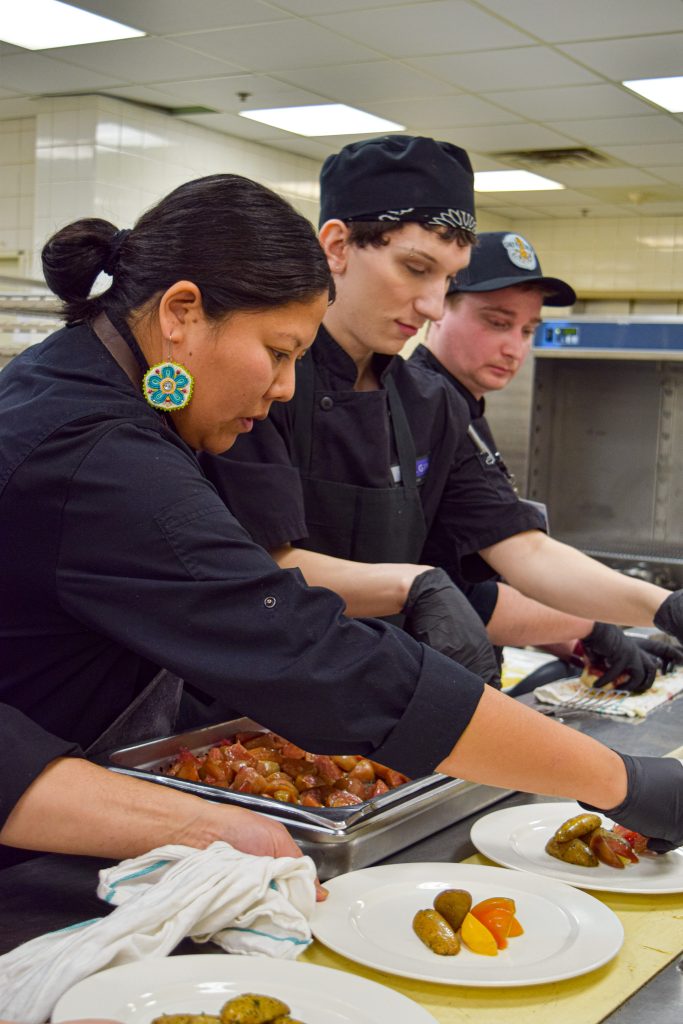
When I co-created the Rooted Indigenous Food Program at Simon Fraser University, I wasn’t thinking in billions.
I was thinking about belonging.
I was thinking about the Indigenous students who walked into that cafeteria every day and didn’t see themselves on the menu. I was thinking about the knowledge my Jijuu — my grandmother, Rosie Firth — carried in her hands: dryfish, caribou stew, berries from the land. Knowledge that had no place in professional kitchens or institutional dining halls.
Rooted changed that, at least in one place. When you put Indigenous food in a public institution, something shifts. Students feel seen. Staff ask questions. The land becomes part of the conversation. Culture enters spaces it was never invited into before.
That moment at SFU wasn’t a one-off. It was a glimpse of something enormous.
The Scale of What’s Being Left on the Table
Canada’s institutional food service sector serves hundreds of millions of meals every year. Think about what that actually means:
- 5.8 million K–12 students eating lunch every school day.
- 1.7 million post-secondary students on campuses from Victoria to St. John’s.
- 3 million acute hospital stays annually.
- Arenas. Convention centres. Corporate campuses. Federal government facilities. The Canadian Armed Forces. Airports.
Estimates put this market at around $9 billion annually — conservative when you include procurement, processing, logistics, and labour.
Now ask yourself: how much of that flows to Indigenous producers, harvesters, and entrepreneurs? Almost none of it. Not because the demand isn’t there. Not because the products don’t exist. But because the systems were never built with Indigenous participation in mind.
That is the gap. And it is also the opportunity.
The Entrepreneurs Are Already Here
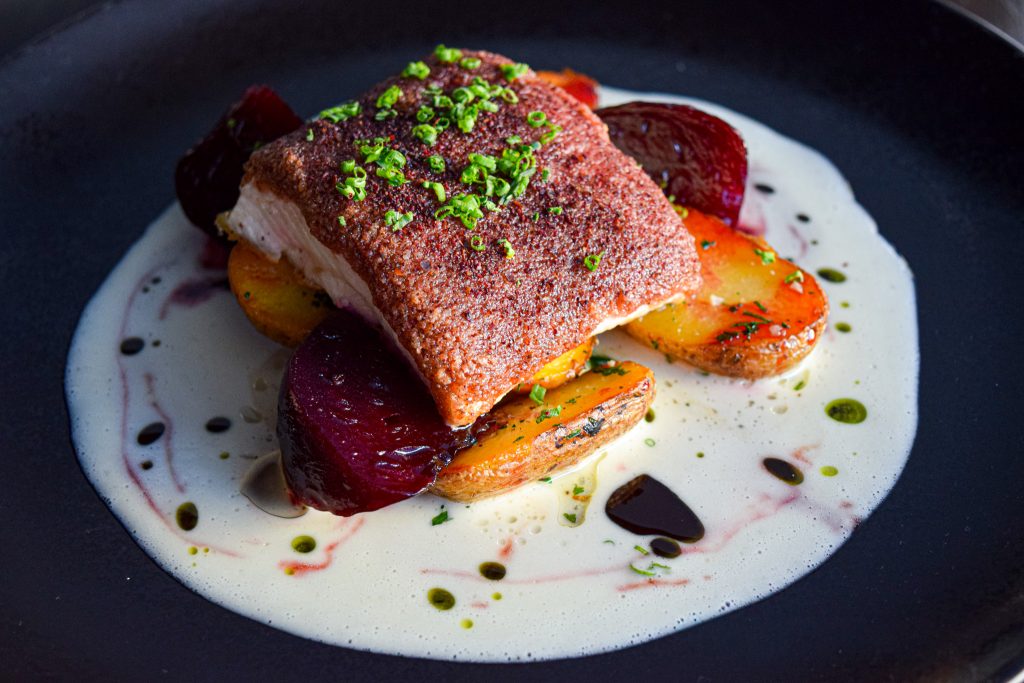
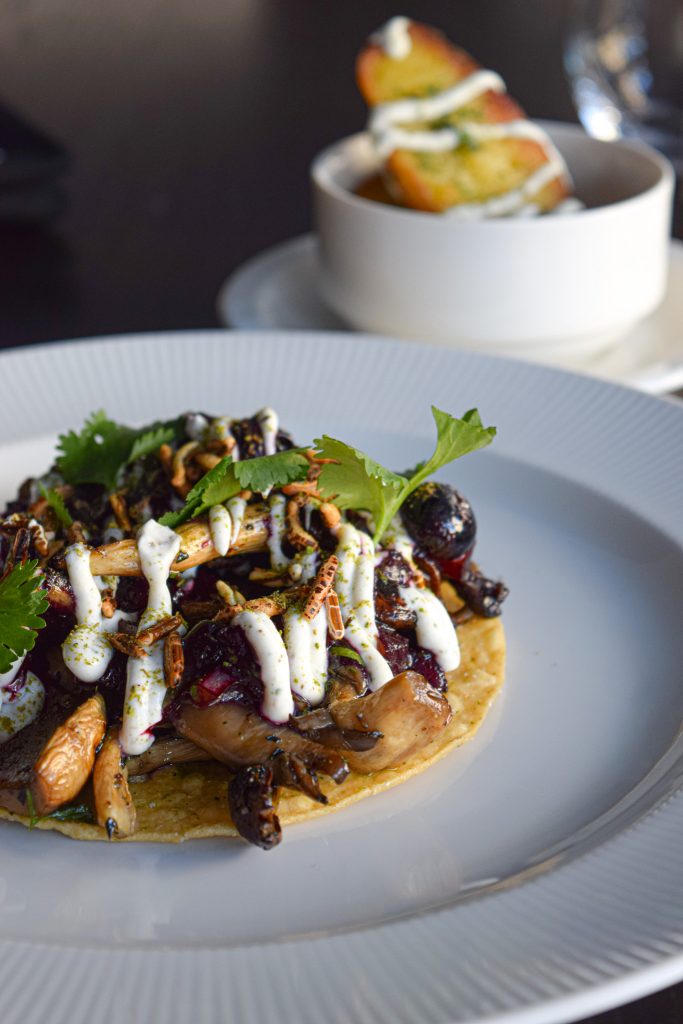
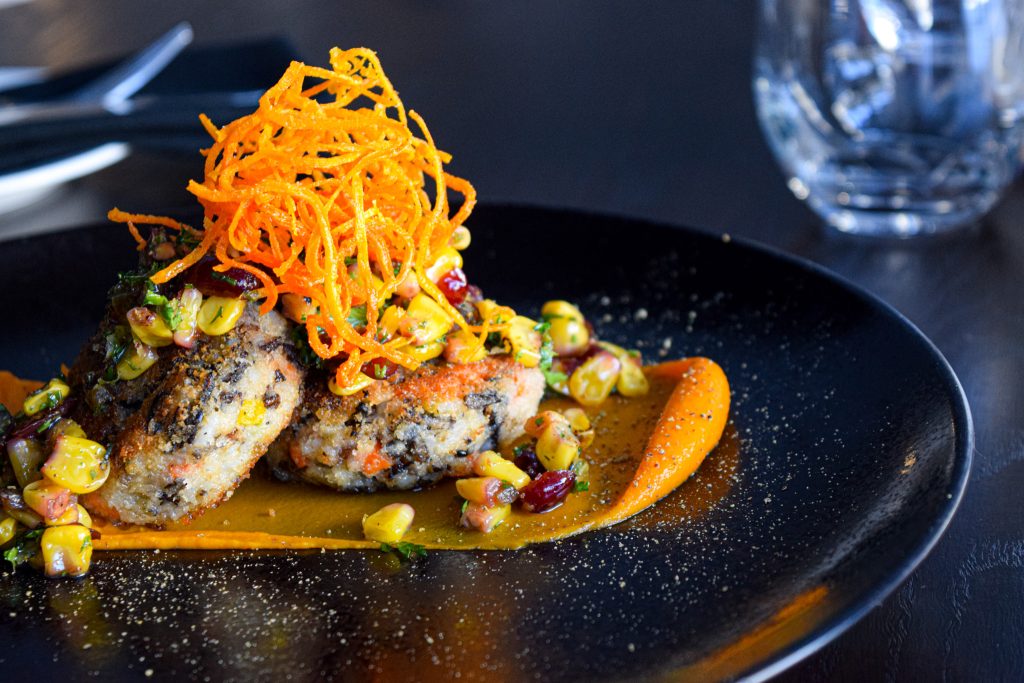
The Indigenous food businesses are already growing — quietly, and without nearly enough institutional support. Bangin’ Bannock, an Indigenous women-owned company keeping bannock traditions alive through authentic mixes. Tradish Jams, preserving wild berry flavours rooted in land-based harvesting. Sriracha Revolver, an Indigenous-owned hot sauce that belongs on every institutional menu. Authentic Indigenous Seafood, a co-operative representing 18 small-scale Indigenous wild-caught fisheries, value-adding into exceptional products ready for schools, colleges, universities, and healthcare. And wild rice harvesters, maple syrup producers, foragers, and First Nations fisheries across this country — producing extraordinary food with extraordinary stories — with almost no pathway into the institutions that feed millions of Canadians every day.
The demand is there. The supply is there. What’s missing is the bridge.
What I See in Communities
I’ve cooked with youth in kitchens from Fort McPherson to Yellowknife to communities across Ontario and British Columbia. Every time, I see the same thing: a generation of young Indigenous people who are ready. But the culinary education system isn’t ready for them.
Walk into any culinary school in Canada and you’ll find full courses on French technique, Italian cuisine, Asian cooking traditions — celebrated as professional foundations. Yet Indigenous culinary knowledge, one of the oldest food cultures on this continent, isn’t in the curriculum. Not a module. Not a unit. Barely a mention. That absence sends a clear message to every young Indigenous person: your food doesn’t belong here.
When Indigenous culinary skills are taught as a core discipline — with the same rigour as any other tradition — more Indigenous chefs graduate with pride, more entrepreneurs find pathways into institutional supply chains, and more Indigenous food shows up on menus where millions eat every day. That’s not a cultural gesture. That’s economic transformation.
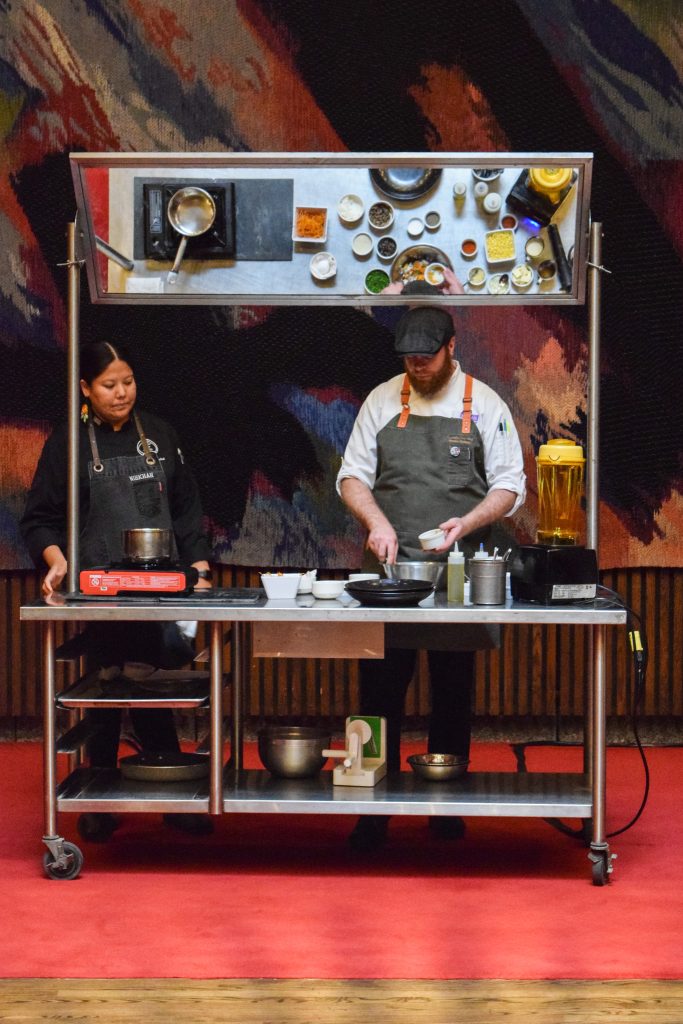
The Institutional Ask Is Actually Simple
For anyone in food service — at a university, school board, hospital, or conference centre — you don’t need a massive policy overhaul to start. You need three things.
Cultural safety. Your team needs to understand what it means to respectfully source, prepare, and serve Indigenous foods — learning whose territory you’re on and whose knowledge is being drawn upon, and honouring that in practice, not just in a land acknowledgement.
A procurement pathway. Indigenous food businesses face real barriers getting onto vendor rosters — certifications, packaging requirements, minimum order quantities, distribution logistics. These are surmountable, but institutions need to lean in, not wait for suppliers to figure it out alone.
Commitment. Not a one-time Indigenous Heritage Month meal. A genuine, sustained commitment to Indigenous food on your menu, Indigenous suppliers in your supply chain, and Indigenous culinary professionals in your kitchen.
The federal government has committed to a 5% Indigenous procurement target. TRC Call to Action #92 calls on the corporate sector to build Indigenous capacity. The policy framework is there. What’s needed now is the will to act.
The Invitation
I didn’t grow up thinking about supply chains. I grew up hauling firewood in –40°C, watching my Jijuu dry fish with her patient, knowing hands. Those hands built more than food — they built a knowledge system, an economy, a way of relating to the land the world desperately needs.
Indigenous food belongs in Canada’s institutions. It always has. The question is whether we’re ready — all of us — to build systems that honour that belonging and make space for the producers, harvesters, entrepreneurs, and youth who are ready and waiting.
The table is big enough. Let’s fill it together.
Mahsi Choo.
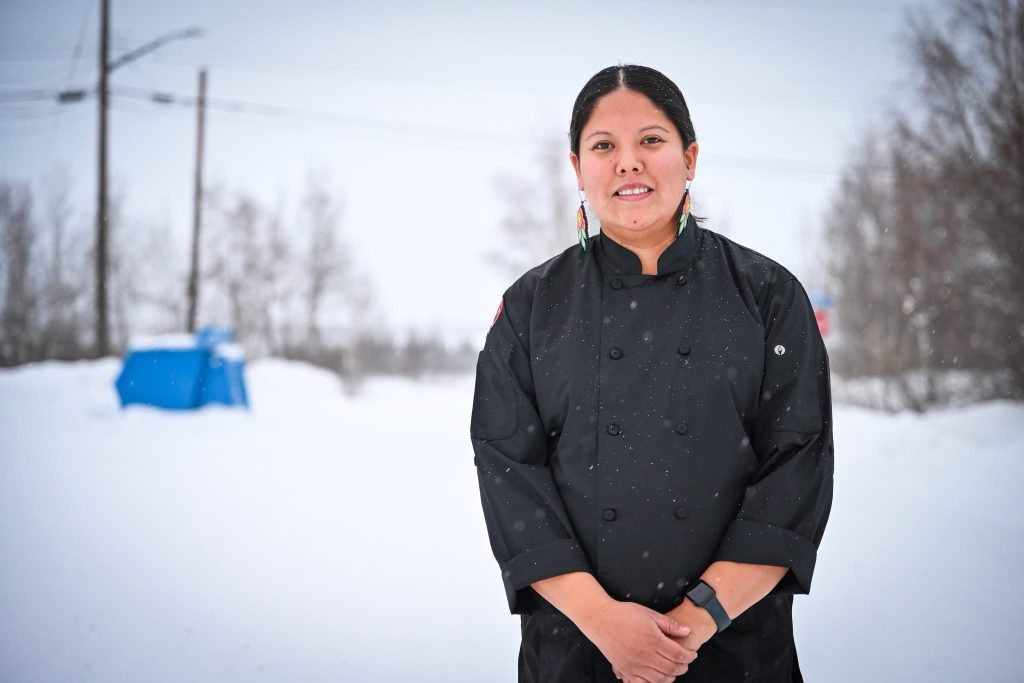
About Stéphanie Baryluk – Red Seal Indigenous Chef | Co-Founder, Nihkhah
Chef Stéphanie Baryluk, a proud Teetl’it Gwich’in from Teetl’it Zheh (Fort McPherson) in Treaty 11 Territory, is an award-winning Red Seal Chef and one of Canada’s leading voices in Indigenous food systems. Drawing deep inspiration from her Arctic upbringing—where hunting, fishing, and land stewardship are woven into daily life—Chef Steph’s work blends culinary excellence with cultural resurgence, wellness, and storytelling.
Named one of Canada’s Top 100 Most Powerful Women (2024), Chef Steph has spent over a decade working in the culinary industry and is now using those experiences and learnings to advance Indigenous food sovereignty through her culinary creations, educational programs, and advocacy with Nihkhah.
As Co-Founder of Nihkhah (meaning “gathering” in Teetl’it Gwich’in), she leads an Indigenous-led collaboration that integrates Indigenous foods and knowledge into institutions and public life while revitalizing food, stories, and skills as tools for empowerment—supporting wellness, food security, and prosperity for Indigenous youth, Elders, and communities. Grounded in authenticity, advocacy, and capacity-building, Nihkhah also champions Indigenous leadership in shaping the future of food systems, ensuring voices and enterprises are supported locally and globally.
Her approach reflects the wisdom and values of her Gwich’in roots—honouring food as a source of identity, connection, and healing, and fostering understanding between cultures through the power of shared meals and stories.