


Growing Up Teetl’it Gwich’in
Teetl’it Gwich’in is who we are, and Teetl’it Zheh (Fort McPherson, NT) is where our First Nation Indigenous People live. A remote Arctic community shaped by the Peel River, the Porcupine caribou herd, and the teachings of our Elders. Growing up there meant that food, land, family, and culture were never separate — they were woven tightly together.
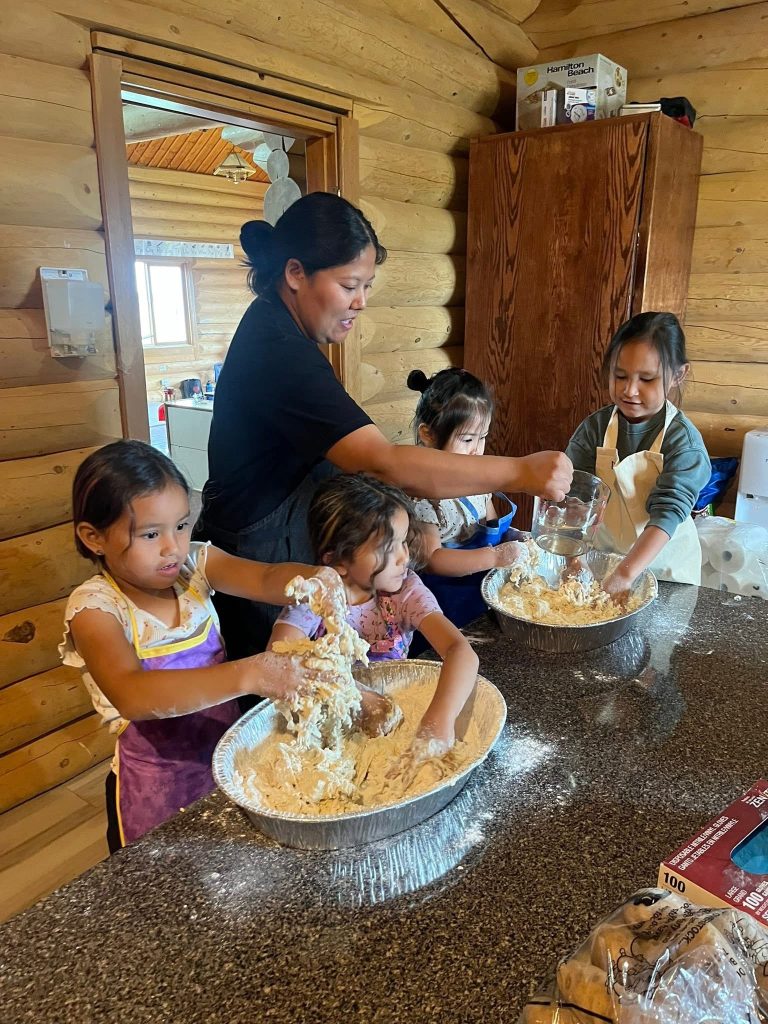
From a very young age, I was doing the everyday work that defines Gwich’in life: grinding and dicing caribou meat, hauling firewood in –40°C, picking berries and rhubarb, ice fishing along the Peel River, and preparing dryfish the way my ancestors always have.
These weren’t chores. They were teachings — how I learned who I was as a Gwich’in woman.
James and Mary Ross, my parents taught me how to respect for harvesting from the land. Jijuu, Rosie Firth my grandmother— taught me that food is identity. Being raised next door to her meant I grew up immersed in the foods, stories, and values of Teetl’it Gwich’in people.
“Our Indigenous Food as Gwich’in — it’s who we are“
Leaving Home
Leaving Teetl’it Zheh after high school was one of the hardest moments of my life.
Suddenly, I wasn’t surrounded by the land, the foods, or the community that had shaped me. I didn’t smell dryfish smoking. I couldn’t hear Gwich’in spoken. I couldn’t head out to the Peel River to ice fish.
For the first time, I felt disconnected — from home, from culture, and from myself.
This is what my parents, grandparents endured as children taken away to residential schools, it is something we will carry forever. Yet they encouraged me to work in the outside world, and teach about our people, so my children can learn and keep our people’s ways alive.
That’s when I realized something important:
To thrive outside my community, I needed to stay rooted in who I was as a Gwich’in woman.
Becoming a Chef in Spaces Not Built for Us
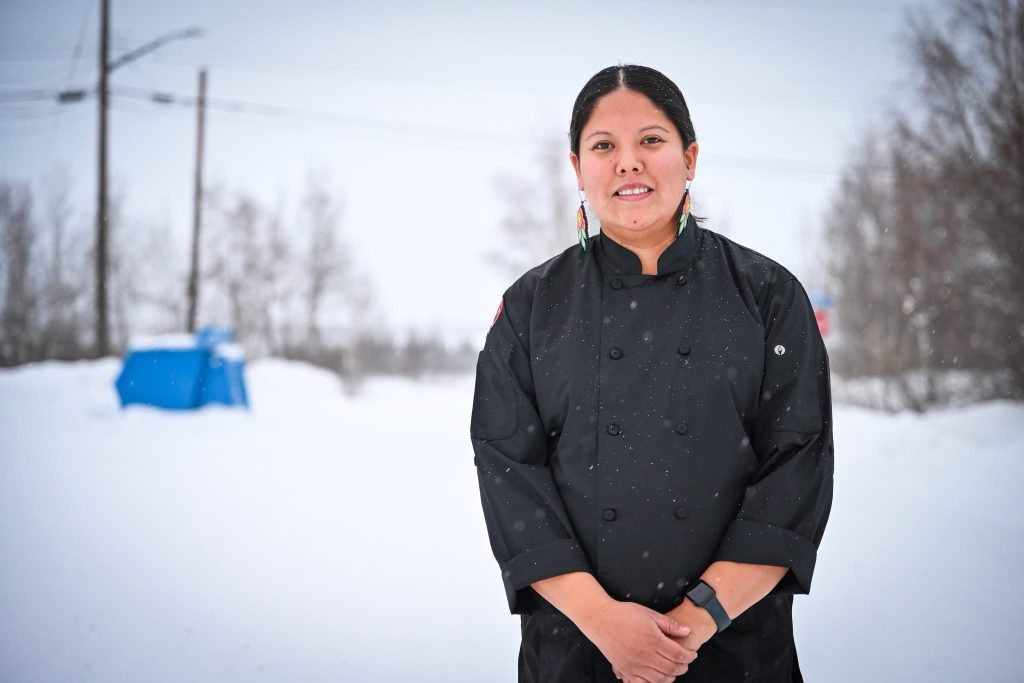
Over the next five years, I completed culinary school, earned my Red Seal, and worked in every part of the food industry. But even as my skills grew, something was missing: connection.
In professional kitchens, I was the only Indigenous Chef.
They didn’t understand our food or where we came from. Our Indigenous foods from the Arctic I grew up with — caribou, dryfish, traditional preparations — didn’t appear on menus or in textbooks.
Teachings from my family, my Jijuu and my community are with me, which I share.
The turning point came with the creation of the Rooted Indigenous Food Program at Simon Fraser University. For the first time, I saw Indigenous foodways respected and celebrated.
Rooted showed me that my culinary path— brings our food, our knowledge, our stories, and our foodways into public life.
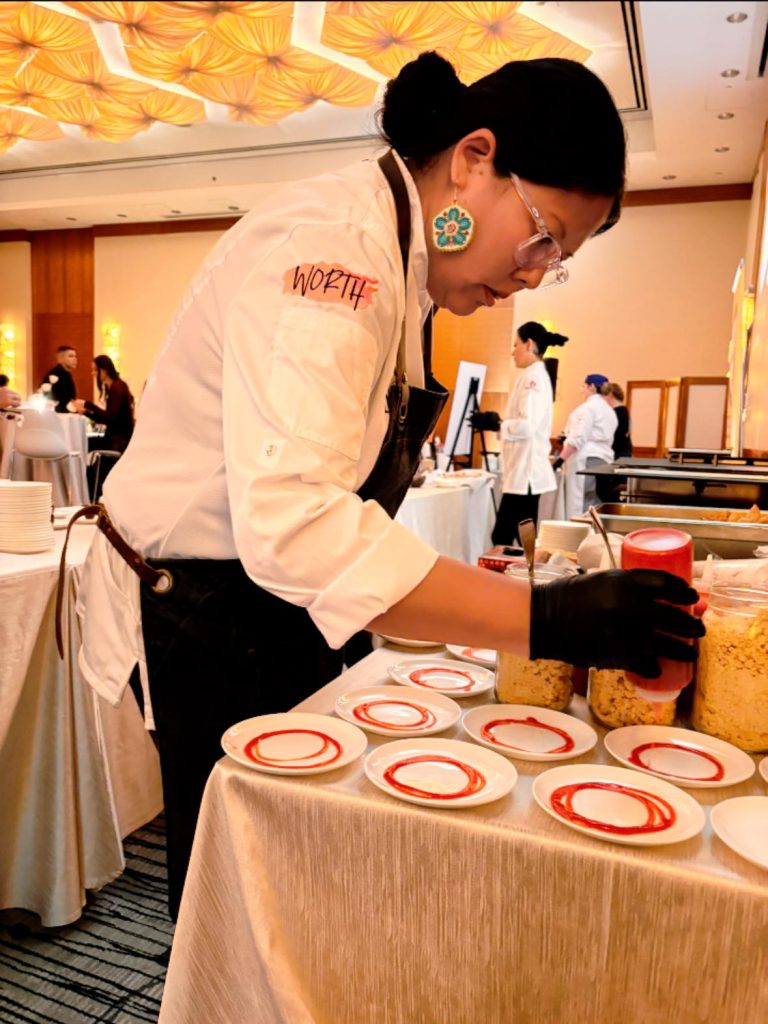
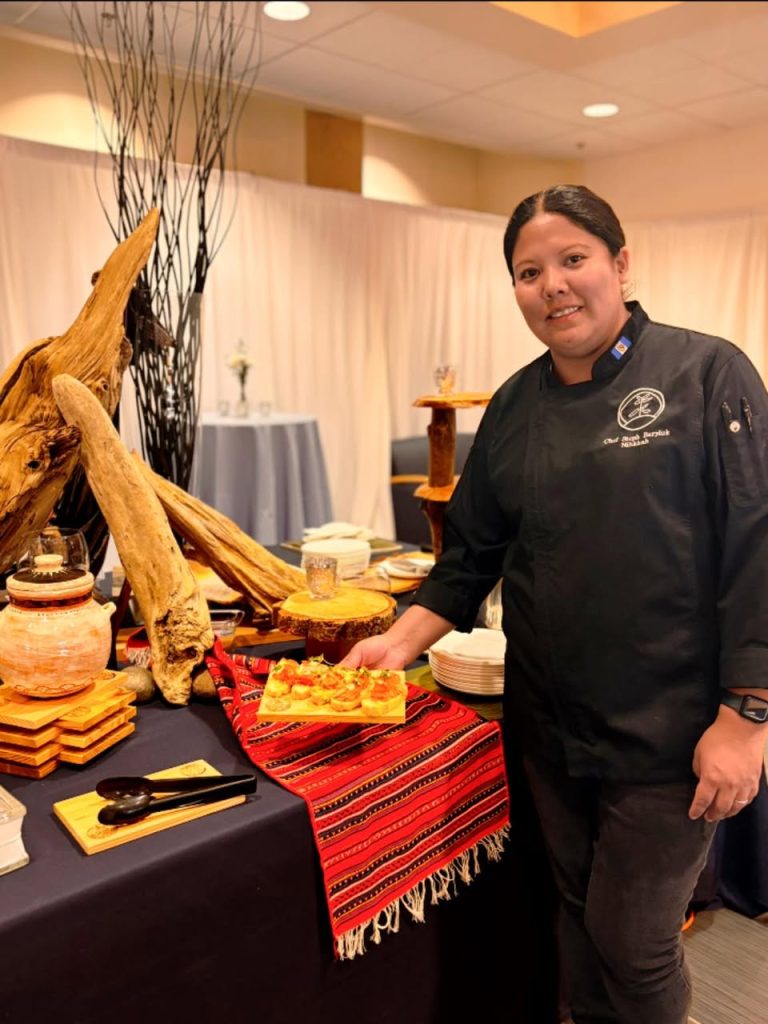
Nihkhah: Coming Full Circle
Today, as co-founder of Nihkhah, my career has come full circle.
Cooking Indigenous foods globally.
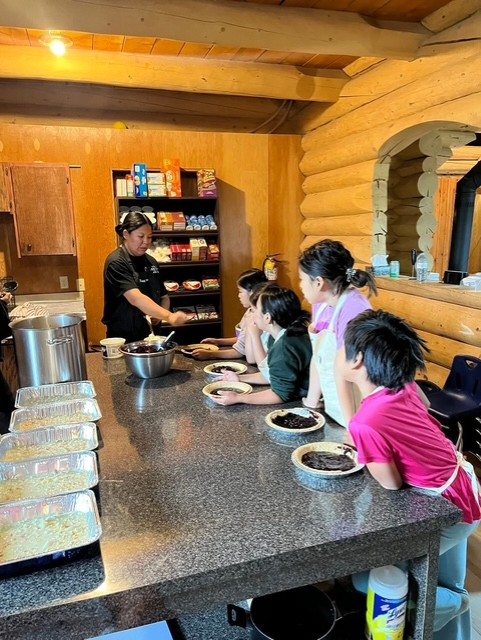
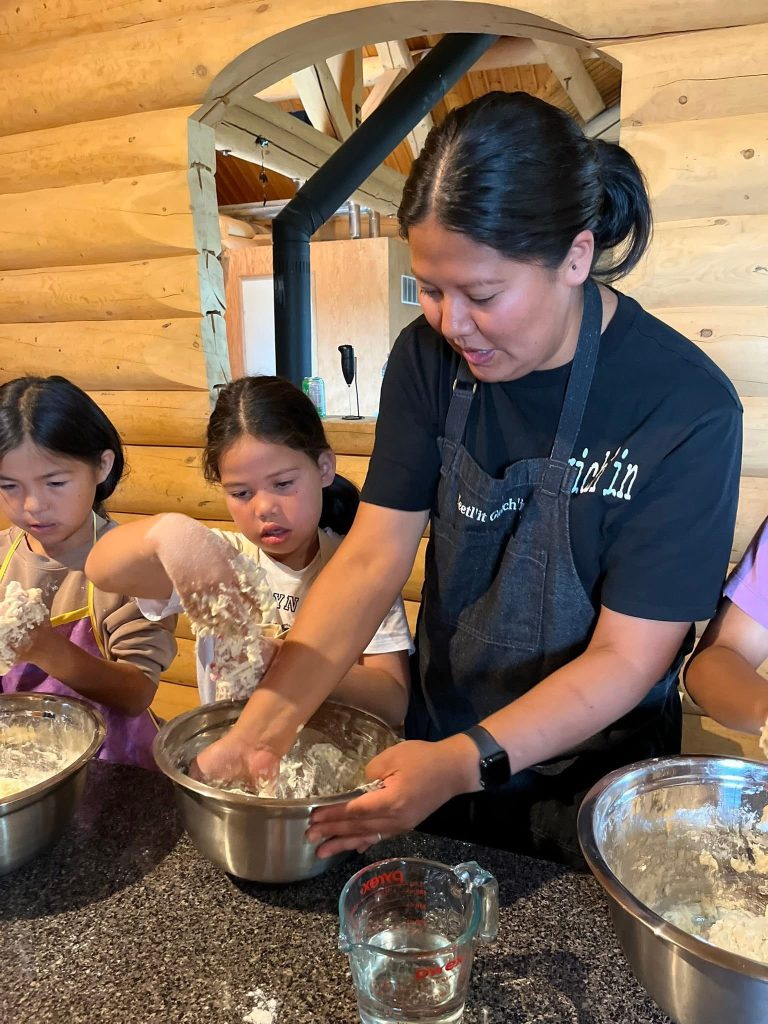
Share skills with Indigenous youth.
Elders Guidance with our programming.
Working with institutions that want to respectfully integrate Indigenous foods.
Working with Indigenous Food producers and entrepreneurs.
Nihkhah means “gathering” in Teetl’it Gwich’in.
It reflects exactly what we do — bringing people together to learn, connect, and build meaningful pathways toward reconciliation through food.
“We belong in these spaces. From the Arctic to Rome, Indigenous food holds the power to heal, connect, and transform.” — Chef Stephanie Baryluk
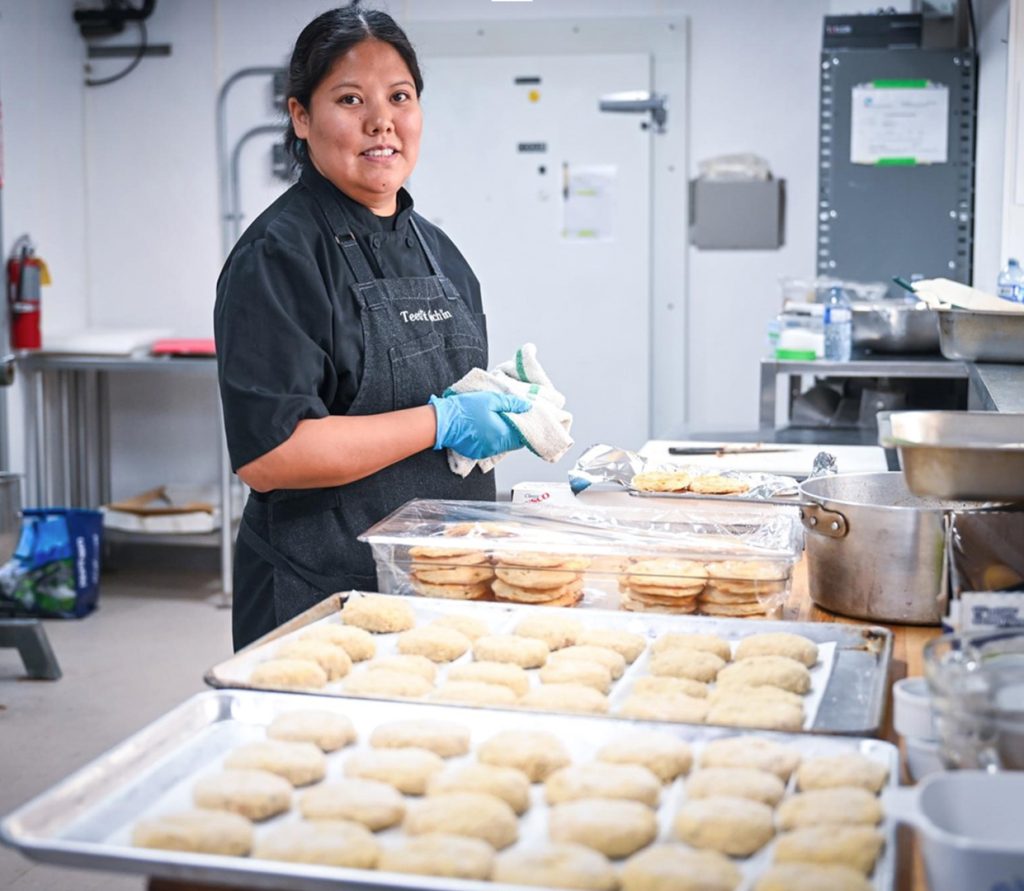
Why Indigenous Foodways Matter Today
Indigenous foodways are more than recipes. They are deep knowledge systems shaped over thousands of years, and the world can learn from us.
They teach us:
- Respect for the Land — take only what you need, give back what you can.
- Circular, Regenerative Practices — use every part, waste nothing.
- Community & Sharing — food is governance and responsibility.
- Culture & Identity — language, stories, and teachings live in our meals.
- Health & Wellness — reconnecting to traditional foods supports community health.
Indigenous communities today face real challenges— food insecurity, climate impacts on caribou and fish, and high rates of diabetes and obesity.
So we must ask:
What foods do we cook?
How do we cook them?
Do our people have access to them?
How do we reconnect to our teachings?
Indigenous foodways hold answers — for sustainability, health, wellness, cultural revitalization, and climate resilience.
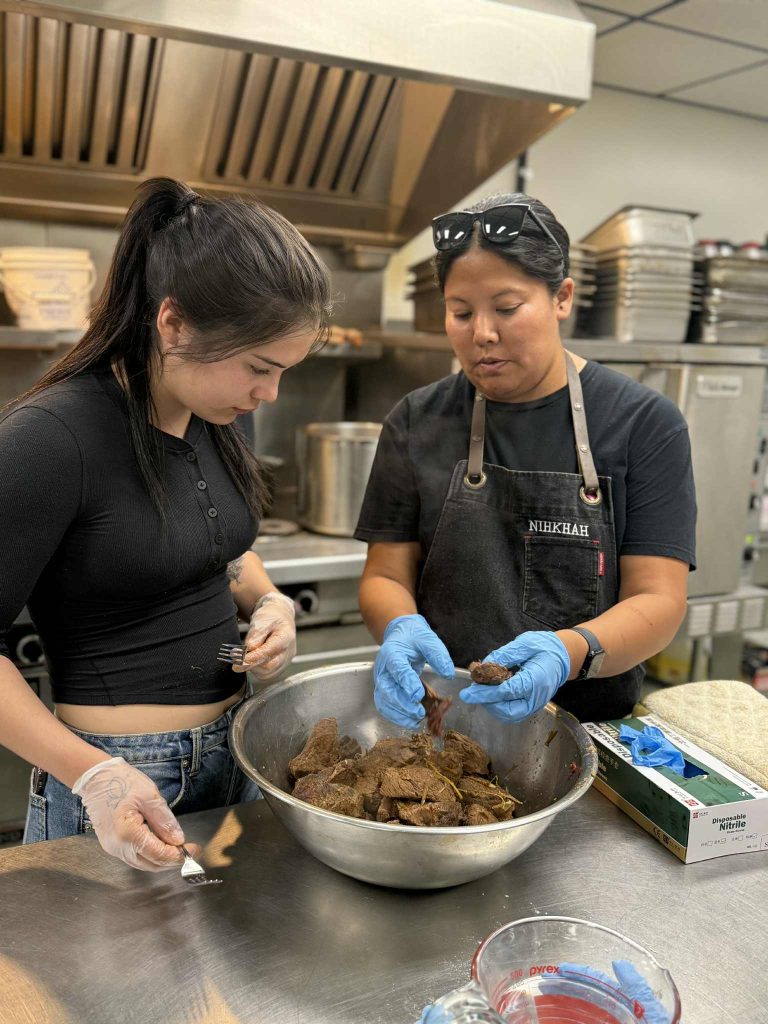
Reconciliation Begins with One Bite
If Canada wants to walk the path of truth and reconciliation meaningfully, food is one of the most powerful places to start.
When Indigenous foods show up in public spaces — farmers’ markets, schools, universities, hospitals — something important happens:
- Indigenous people feel seen
- Children learn whose land they live on
- Institutions face their responsibility
- Communities build relationships
- Knowledge holders are honoured
- Producers find new opportunities
This isn’t symbolic.
It’s relational.
It’s transformational.
Reconciliation is something we practice.
And food gives everyone a way to practice it every day.
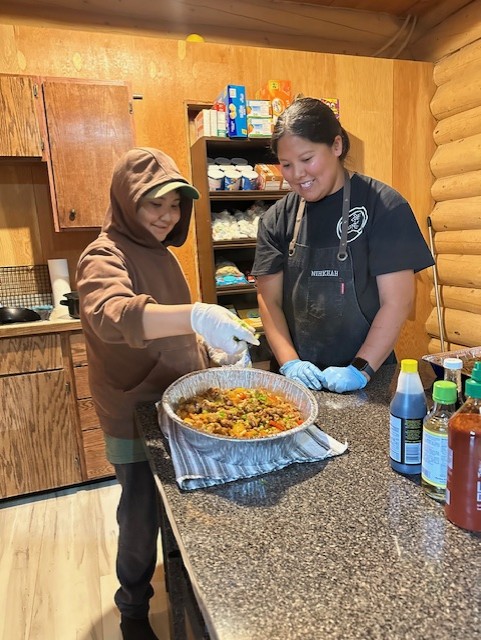
A Path Forward for All of Us
You don’t need to be a chef to be part of this work. You can start small:
- Support Indigenous vendors at your local farmers’ market
- Learn which Indigenous nation’s land you live on
- Cook with Indigenous ingredients
- Support Indigenous chefs, producers, and harvesters
- Ask your institution if they include Indigenous sourcing
- Share what you learn with others
Every choice matters.
Every meal is an opportunity to honour the past and shape a better future.
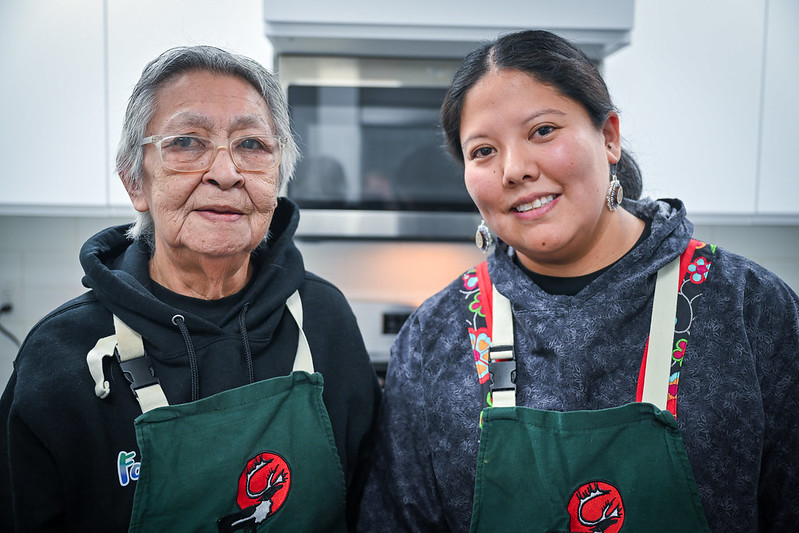
Coming Back to Jijuu’s Teachings
When I think of home, I think of my Jijuu, Rosie Firth — her hands steady and patient, filled with generations of knowledge. I think of her drying fish, stirring caribou stew, and teaching without many words.
Those teachings carried me through culinary school, through difficult kitchens, and onto global stages. They guide every workshop, recipe, and menu I bring into the world.
They remind me that Indigenous food is identity.
Indigenous food is healing.
Indigenous food is governance.
Indigenous food is truth.
Indigenous food is reconciliation.
When we gather around food — with humility, curiosity, and connection — reconciliation becomes possible.
Food is how we remember.
Food is how we heal.
Food is how we begin again.
About Stéphanie Baryluk – Red Seal Indigenous Chef | Co-Founder, Nihkhah
Chef Stéphanie Baryluk, a proud Teetl’it Gwich’in from Teetl’it Zheh (Fort McPherson) in Treaty 11 Territory, is an award-winning Red Seal Chef and one of Canada’s leading voices in Indigenous food systems. Drawing deep inspiration from her Arctic upbringing—where hunting, fishing, and land stewardship are woven into daily life—Chef Steph’s work blends culinary excellence with cultural resurgence, wellness, and storytelling.
Named one of Canada’s Top 100 Most Powerful Women (2024), Chef Steph has spent over a decade working in the culinary industry and is now using those experiences and learnings to advance Indigenous food sovereignty through her culinary creations, educational programs, and advocacy with Nihkhah.
As Co-Founder of Nihkhah (meaning “gathering” in Teetl’it Gwich’in), she leads an Indigenous-led collaboration that integrates Indigenous foods and knowledge into institutions and public life while revitalizing food, stories, and skills as tools for empowerment—supporting wellness, food security, and prosperity for Indigenous youth, Elders, and communities. Grounded in authenticity, advocacy, and capacity-building, Nihkhah also champions Indigenous leadership in shaping the future of food systems, ensuring voices and enterprises are supported locally and globally.
Her approach reflects the wisdom and values of her Gwich’in roots—honouring food as a source of identity, connection, and healing, and fostering understanding between cultures through the power of shared meals and stories.